Triana ceramics: the history of Seville tiles and where to buy them
Triana's potters have decorated Seville with tiles for centuries. History, techniques (cuerda seca, arista, Pisano), the Centro Cerámica Triana and where to buy authentic ceramics.
Tiles are everywhere in Seville: courtyard dados, façades, street signs, devotional panels and fountains. Almost all come from the same place: the kilns of Triana, across the river.
Centuries of history
Clay from the Guadalquivir has fed Triana's workshops since antiquity. In Moorish times, tile mosaics and the cuerda seca technique flourished. In the 15th century came the arista technique, which allowed tiles to be mass-produced. In the 16th century, the Italian Niculoso Pisano introduced the flat painted tile, opening the door to large decorative panels. In the 19th and 20th centuries, factories such as Santa Ana and Mensaque enjoyed their golden age.
Where to see the best ceramics
- Real Alcázar: Mudéjar and Renaissance dados from the 14th to 16th centuries.
- Casa de Pilatos, 5 minutes from the apartment: one of the largest tile collections in any house in the world.
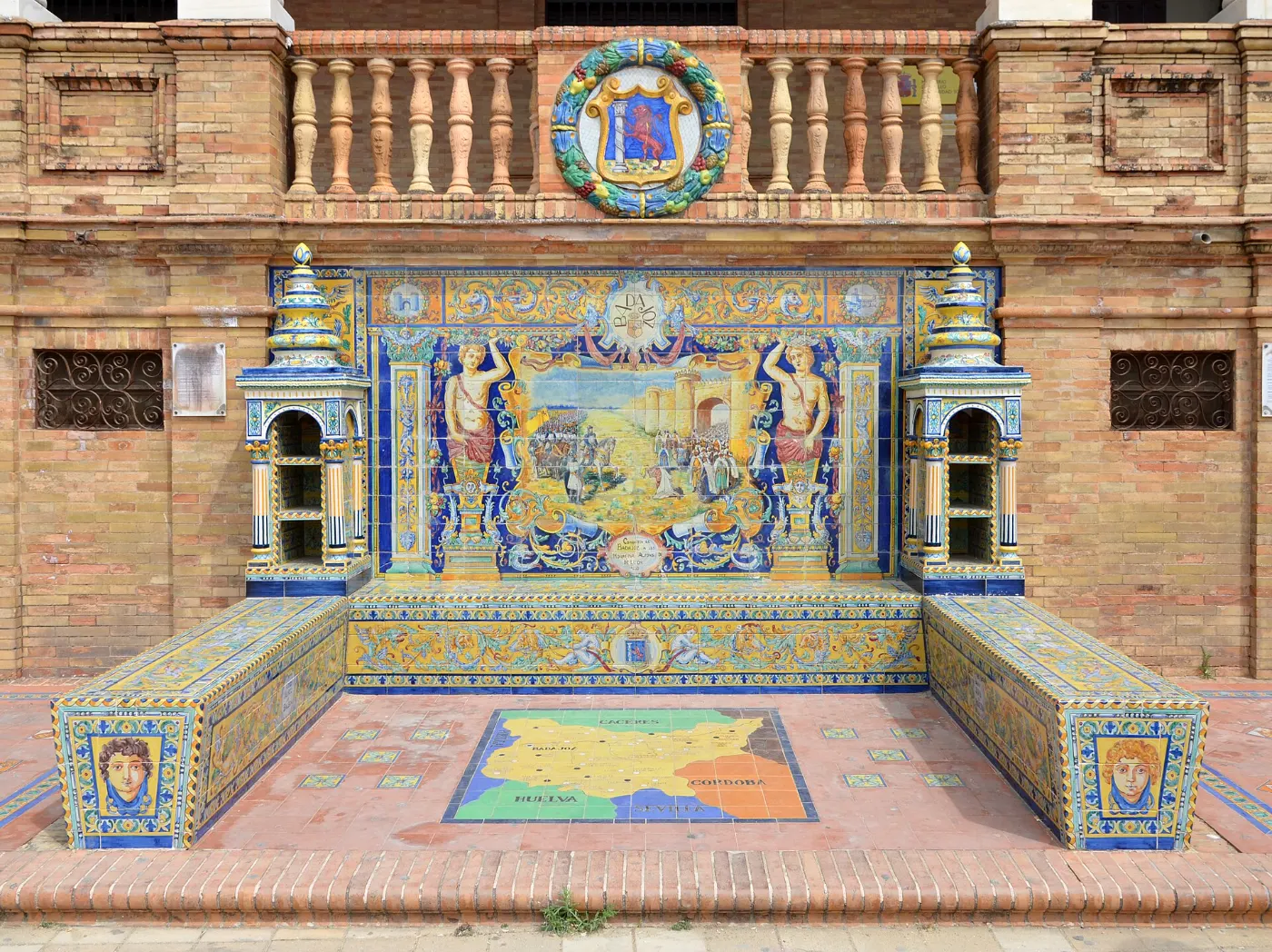
- Plaza de España: ceramic benches dedicated to the provinces, made for the 1929 Ibero-American Exposition.
- Centro Cerámica Triana: a museum in the old Cerámica Santa Ana factory, with original kilns.
Where to buy authentic ceramics
In Triana, the streets Antillano Campos, Alfarería and San Jorge still have workshops and ceramic shops, such as the historic Cerámica Santa Ana. Look for hand-painted pieces and ask about the workshop: a tile with your house number or a painted plate is a souvenir for life.
Getting there
From Calle Vidrio, cross the centre to the Isabel II (Triana) bridge. It is about 25 minutes on foot. On the other side, the Triana Market and the Centro Cerámica Triana are a few steps away.
Frequently asked questions
What is Triana ceramics?
The pottery and tiles made in the Seville district of Triana, a centuries-old tradition based on clay from the Guadalquivir.
Where is the Centro Cerámica Triana?
On Calle Antillano Campos, in the old Cerámica Santa Ana factory, next to the Triana Market.
Where can I see tiles near the centre?
At the Casa de Pilatos, the Real Alcázar and Plaza de España, all within walking distance of the Jewish Quarter.